Planning your adventure to Vietnam’s stunning landscapes and vibrant cities? Understanding Vietnam visa requirements is your first crucial step. This comprehensive guide breaks down everything you need to know about entering Vietnam – from who needs a visa to application processes, fees, and essential tips for a smooth entry experience.
Vietnam Visa Requirements: Who Needs a Visa?
Vietnam’s entry requirements vary significantly based on your nationality, purpose of visit, and intended length of stay. As of 2026, Vietnam has one of the most accessible visa policies in Southeast Asia, with 39 countries now enjoying visa-free entry.
| Nationality Group | Visa Requirement | Maximum Stay |
|---|---|---|
| US Citizens | Visa Required | Up to 90 days |
| UK Citizens | Visa Exempt | 45 days |
| ASEAN Countries | Visa Exempt | 14-30 days (varies) |
| EU Countries (24 nations) | Visa Exempt | 45 days |
| Japan, South Korea | Visa Exempt | 45 days |
| Most Other Countries | Visa Required | Up to 90 days |
Passport Requirements for Vietnam Entry
-
Passport must be valid for at least 6 months beyond your planned exit date
-
Passport must have at least 2 blank visa pages (1 blank page for visa-exempt travelers)
-
Damaged passports may be rejected at immigration
-
U.S. emergency passports (12-page) may be denied for e-visa applications
Important Note: Even if you’re from a visa-exempt country, you’ll need a visa if your stay exceeds the exemption period or if you’re entering for purposes other than tourism.
Comprehensive List of Visa-Exempt Countries (2026)
Vietnam has significantly expanded its visa exemption program. As of August 2025, the following 39 countries enjoy visa-free entry:
45-Day Visa Exemption (Extended until March 2028)
Citizens from these 24 countries can stay up to 45 days without a visa, regardless of passport type or purpose of entry:
Western Europe: Germany, France, Italy, Spain, United Kingdom, Denmark, Sweden, Norway, Finland, Belgium, Netherlands, Luxembourg, Switzerland, Poland, Czech Republic
Eastern Europe: Bulgaria, Croatia, Hungary, Romania, Slovakia, Slovenia
Asia: Japan, South Korea, Russia
30-Day Visa Exemption (ASEAN and Bilateral Agreements)
| Country | Maximum Stay |
|---|---|
| Cambodia | 30 days |
| Indonesia | 30 days |
| Laos | 30 days |
| Malaysia | 30 days |
| Singapore | 30 days |
| Thailand | 30 days |
| Kazakhstan | 30 days |
| Kyrgyzstan | 30 days |
| Mongolia | 30 days |
| Belarus | 30 days (max 90 days per year) |
Other Exemptions
| Country | Maximum Stay |
|---|---|
| Philippines | 21 days |
| Brunei | 14 days |
| Myanmar | 14 days |
| Chile | 90 days |
| Panama | 90 days |
Types of Vietnam Visas Explained
Vietnam offers several visa options depending on your travel needs. Understanding the differences will help you choose the right type for your journey.
E-Visa (Electronic Visa)
The e-visa has become the most popular option for most travelers due to its convenience and straightforward application process. Since August 2023, Vietnam’s e-visa system covers citizens from all countries and territories.
Vietnam E-Visa Details:
| Feature | Details |
|---|---|
| Validity | Up to 90 days (single or multiple entry) |
| Processing time | 3-5 working days (standard) |
| Fee | $25 (single entry) or $50 (multiple entry) |
| Entry points | Valid at 83 international checkpoints (as of December 2025) |
Major Update – December 2025: Vietnam has expanded e-visa entry points from 42 to 83 checkpoints, including 17 airports, 27 land borders, and 39 seaports following Resolution 389/NQ-CP.
Visa on Arrival (VOA)
The visa on arrival option requires pre-approval but can be useful for last-minute travelers or those with special circumstances.
Vietnam Visa on Arrival Details:
| Feature | Details |
|---|---|
| Validity | Up to 30 days (single or multiple entry) |
| Processing time | 2-4 working days for approval letter |
| Fee | $25 (single) or $50 (multiple) + stamping fee |
| Entry points | International airports only |
Required Documents for VOA:
-
Original passport (valid 6+ months, 2 blank pages)
-
Printed visa approval letter
-
Two passport-sized photos (4x6cm)
-
Completed Entry/Exit Form (NA1)
-
Cash for stamping fee (USD or VND)
Embassy/Consulate Visa
Applying through Vietnamese diplomatic missions is the traditional approach and may be necessary for certain visa types.
| Feature | Details |
|---|---|
| Validity | Various options available |
| Processing time | 5-7 business days (varies by location) |
| Fee | Varies by visa type and embassy |
| Best for | Special visa types or longer stays |
E-Visa vs. Visa on Arrival: Which Is Better?
Both options have advantages depending on your specific travel situation:
| Feature | E-Visa | Visa on Arrival |
|---|---|---|
| Available for | All nationalities | All nationalities |
| Entry points | 83 checkpoints (air, land, sea) | Major airports only |
| Maximum stay | 90 days | 30 days |
| Processing time | 3-5 working days | 2-4 working days |
| Wait time at airport | None | 15-60 minutes |
| Fee | $25-$50 | $50-$100 (service + stamping) |
| Fastest processing | 4-8 hours (urgent) | 2-4 hours (urgent) |
| Pros | No waiting at airport | Less strict photo requirements |
| Cons | Strict photo requirements | Airport waiting required |
The e-visa has become increasingly popular due to its convenience and broader acceptance at all entry points, with the majority of visitors now choosing this option.
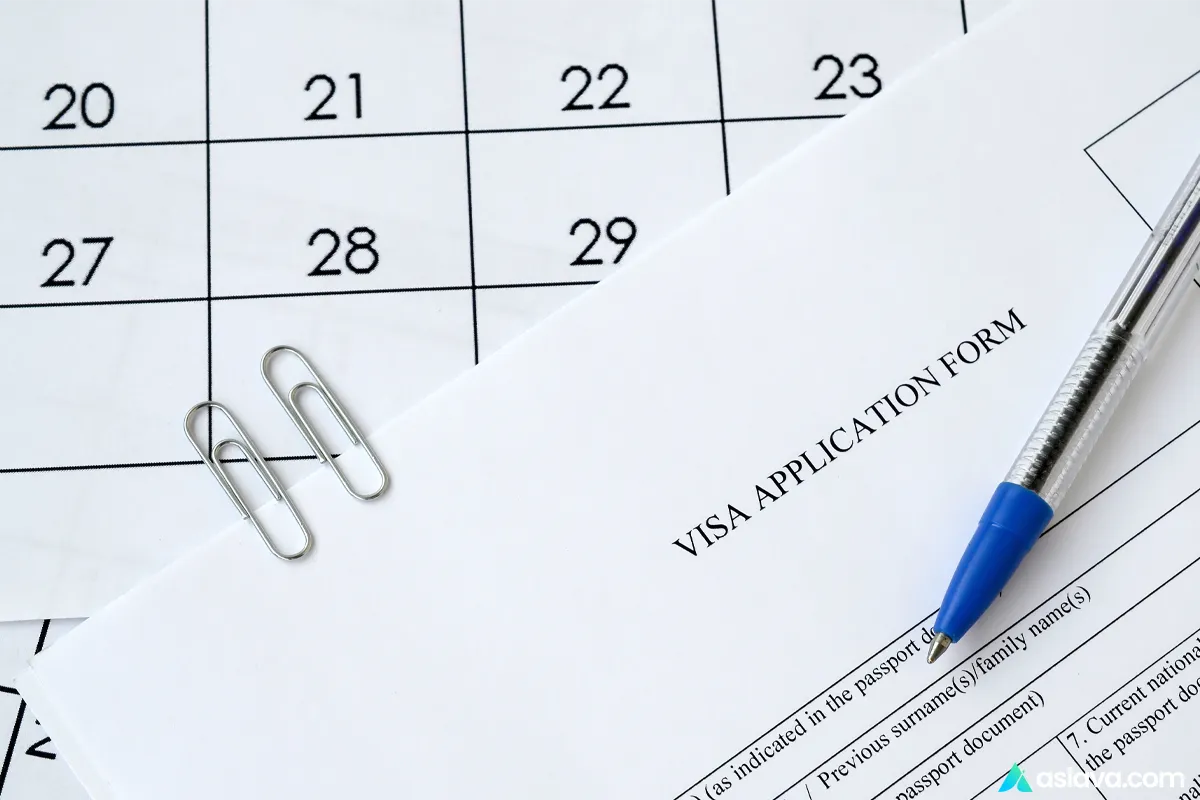
Vietnam Visa Application Process: Step by Step
How to Apply for Vietnam E-Visa
-
Visit the official Vietnam Immigration Portal at evisa.gov.vn or thithucdientu.gov.vn
-
Complete the online application form with your personal and travel details
-
Upload a recent passport-style photo (4x6cm, white background) and passport data page scan
-
Pay the visa fee online ($25 for single entry, $50 for multiple entry)
-
Receive your e-visa via email within 3-5 working days
-
Print your e-visa to present upon arrival in Vietnam
How to Apply for Vietnam Visa on Arrival
-
Apply online through a visa agency for an approval letter
-
Receive your approval letter via email (2-4 business days)
-
Prepare two passport-sized photos (4×6 cm, white background)
-
Complete the entry/exit form (NA1) – provided on your flight or at the airport
-
Upon arrival, submit your approval letter, photos, form, and passport at the “Visa on Arrival” counter
-
Pay the stamping fee in cash (USD or VND)
-
Receive your visa stamp in your passport (15-60 minutes wait time)
Vietnam Visa Fees and Processing Times (2026)
Visa costs and processing times vary based on the type of visa, entry options, and how quickly you need it processed:
| Visa Type | Processing Time | Government Fee | Expedited Fee |
|---|---|---|---|
| E-Visa (Single Entry) | 3-5 working days | $25 | +$65 (2 days) |
| E-Visa (Multiple Entry) | 3-5 working days | $50 | +$80 (1 day) |
| VOA (Single Entry) | 2-4 working days | $25 stamping | +$100 (4-8 hours) |
| VOA (Multiple Entry) | 2-4 working days | $50 stamping | +$100 (4-8 hours) |
| Embassy Visa | 5-7 working days | Varies | Varies |
Extended Visa Options:
| Visa Duration | Government Fee |
|---|---|
| Valid 90-180 days | $95 |
| Valid 180 days – 1 year | $135 |
| Valid 1-2 years | $145 |
| Valid 2-5 years | $155 |
Payment Methods: E-visa fees can be paid online via credit/debit card. Visa on arrival stamping fees must be paid in cash (USD or VND preferred) upon arrival – no credit cards accepted at the stamping counter.
Special Cases and Exemptions
Phu Quoc Island Exemption
Travelers visiting only Phu Quoc Island can stay for up to 30 days without a visa, regardless of nationality:
Requirements:
-
Enter and exit through Phu Quoc International Airport or seaport directly from a foreign country
-
Stay exclusively on Phu Quoc Island
-
Have a return/onward ticket to a country outside mainland Vietnam
-
Passport valid for at least 6 months
Important: If you fly to Hanoi or Ho Chi Minh City first and then travel domestically to Phu Quoc, you will need a regular Vietnam visa (unless your nationality qualifies for visa exemption).
Transit Passengers
Transit passengers staying less than 24 hours in the international transit area do not need a visa, provided:
-
They have a valid passport (6+ months validity)
-
They have an onward ticket to a third country
-
They have a valid visa for the third country (unless visa-exempt)
-
They do not leave the transit area
If you need to leave the transit area or have a layover longer than 24 hours, you’ll need a visa.
APEC Business Travel Card Holders
Business travelers with valid APEC Business Travel Cards (ABTC) that list “VNM” (Vietnam) can enter without a visa for business purposes:
-
Maximum stay: 60 days per entry
-
Fast-track entry through special APEC lanes at airports
-
Can be extended up to two times (3 months per extension)
Overseas Vietnamese (5-Year Visa Exemption)
Vietnamese nationals living abroad and their spouses/children may be eligible for a 5-year visa exemption certificate:
-
Stay up to 180 days per entry
-
Valid for up to 5 years with multiple entries
-
Can extend temporary stay by up to 6 months without leaving Vietnam
New Special Visa Exemption for Priority Visitors (2025)
Effective August 15, 2025, Vietnam grants 5-year visa exemption cards to special categories of foreign nationals under Decree No. 221/2025/NĐ-CP:
-
Journalists and media professionals accredited by Vietnam
-
Academics, scientists, and professors from universities and research institutes
-
Investors, corporate leaders, and executives of major global enterprises
-
Artists, athletes, and cultural figures with international recognition
-
Tech professionals in priority sectors (semiconductors, AI)
Vietnam’s New Golden Visa Program (2025-2026)
Vietnam has launched an ambitious “Golden Visa” program as part of efforts to attract long-term visitors, investors, and talent:
Three Visa Categories:
| Visa Type | Validity | Eligibility |
|---|---|---|
| Golden Visa | 5-10 years | Long-stay residents making economic/cultural contributions |
| Investor Visa | Up to 10 years | Investors (eligible for permanent residency after 5 years) |
| Talent Visa | 5 years | Professionals, artists, researchers, innovators |
The talent visa component is already in effect as of August 2025, while the 10-year investor visa is expected to be available sometime after 2026.
Entry and Exit Requirements
Arrival Procedures
E-visa holders: Proceed directly to immigration with your printed e-visa and passport
Visa on arrival: Look for the “Landing Visa” or “Visa on Arrival” counter before immigration to obtain your visa stamp
All travelers:
-
Complete an entry/exit form (provided on your flight or at the immigration counter)
-
Present your passport, visa (if required), and completed form to the immigration officer
-
Keep your stamped entry form safe – you’ll need it when departing
Departure Procedures
-
Present your passport and entry/exit form at immigration
-
Ensure you’re not overstaying your visa validity period
-
Be prepared to show your return/onward ticket if requested
Overstay Penalties
Warning: Overstaying your visa results in significant fines and potential future entry issues:
| Overstay Duration | Fine (VND) | Fine (USD approx.) |
|---|---|---|
| 1-15 days | 500,000 – 2,000,000 | $22 – $88 |
| 16-29 days | 3,000,000 – 5,000,000 | $133 – $221 |
| 30-59 days | 5,000,000 – 10,000,000 | $221 – $441 |
| 60-89 days | 10,000,000 – 15,000,000 | $441 – $661 |
| 90+ days | 15,000,000 – 20,000,000 | $661 – $885 |
Additional consequences: Possible deportation, blacklisting, and ban from future entry to Vietnam.
Visa Extension and Renewal
Can You Extend Your Vietnam Visa?
Tourist e-visas and visa on arrival cannot be extended. If you need to stay longer, you must exit Vietnam and apply for a new visa.
However, the following visa types can be extended:
-
Business visa (DN)
-
Work visa (LĐ)
-
Family visit visa (TT)
-
Investment visa (ĐT)
-
5-year visa exemption certificate
Extension Fees:
-
Single-entry visa extension: $25
-
Up to 3 months (multiple): $50
-
3-6 months: $95
-
6-12 months: $135
Processing time: 5-7 working days. Apply at least 5-7 days before your visa expires.
Common Visa Application Mistakes to Avoid
Many visa applications face delays or rejections due to simple errors. Here’s how to avoid the most common mistakes:
Application Errors
-
Incorrect passport information (number, expiration date)
-
Name mismatch between application and passport (typing “O” instead of “0”)
-
Selecting wrong visa type or entry points
-
Providing fake or unverifiable accommodation address
Photo Issues
-
Wrong background (must be plain white)
-
Incorrect dimensions (must be 4×6 cm portrait format)
-
Poor lighting, shadows, or glare
-
Using old photos (more than 6 months old)
-
Photos with glasses, hats, or filters/edits
-
Low resolution or wrong file format (must be JPG, under 2MB)
Payment and Timing Mistakes
-
Applying too late for your travel date
-
Not accounting for holidays or weekends
-
Not having cash for visa on arrival stamping fee
-
Forgetting to print the e-visa (mobile copy may not be accepted)
83 Ports of Entry for E-Visa Holders (December 2025 Update)
Following Resolution 389/NQ-CP issued on December 2, 2025, Vietnam now accepts e-visas at 83 international checkpoints:
International Airports (17 total)
Original 13 airports plus 4 new additions:
-
Noi Bai (Hanoi)
-
Tan Son Nhat (Ho Chi Minh City)
-
Da Nang
-
Cam Ranh (Nha Trang)
-
Cat Bi (Hai Phong)
-
Can Tho
-
Phu Bai (Hue)
-
Phu Quoc
-
Van Don (Quang Ninh)
-
Lien Khuong (Da Lat)
-
Tho Xuan (Thanh Hoa)
-
Phu Cat (Binh Dinh)
-
Dong Hoi (Quang Binh)
-
Long Thanh (Dong Nai) – New
-
Gia Binh (Bac Ninh) – New
-
Vinh (Nghe An) – New
-
Chu Lai (Da Nang) – New
Land Border Gates (27 total)
Including Mong Cai, Huu Nghi, Lao Cai, Na Meo, Cau Treo, Cha Lo, Lao Bao, Bo Y, Moc Bai, Xa Mat, Tinh Bien, and 11 new additions.
Seaports (39 total)
Including Hon Gai, Hai Phong, Da Nang, Nha Trang, Quy Nhon, Vung Tau, Ho Chi Minh City, and 26 new additions.
Note: Even if you selected a specific entry port in your visa application, you can now enter through any of the 83 eligible ports.
Frequently Asked Questions About Vietnam Visas
Can I extend my Vietnam visa if I want to stay longer?
Tourist e-visas cannot be extended. If you need to stay longer, you must exit Vietnam and apply for a new visa. Business visas and certain other types may be eligible for extension through local immigration offices.
What happens if my visa application is rejected?
If your e-visa application is rejected, you can reapply after correcting any errors. Government fees are typically non-refundable, but many visa services offer a money-back guarantee for their service fees.
Do I need a visa if I’m on a cruise that stops in Vietnam?
Yes, if you plan to disembark and explore Vietnam during your cruise stops, you’ll need a valid visa. A single-entry visa is sufficient for multiple ports within Vietnam during the same cruise.
Can I enter Vietnam at one port and exit from another?
Yes, with an e-visa or regular visa, you can enter and exit through different ports. For example, you can fly into Hanoi and depart from Ho Chi Minh City.
Do I need to enter Vietnam on the exact date specified in my visa?
No, you can enter Vietnam on any date within your visa’s validity period. However, you cannot enter before the start date or after the expiration date listed on your visa.
Can I apply for a Vietnam visa while traveling in another country?
Yes, you can apply for an e-visa from anywhere with internet access. Alternatively, you can visit a Vietnamese embassy or consulate in your current location.
Latest Updates to Vietnam Visa Policies (2025-2026)
Vietnam has made significant improvements to its visa system:
-
December 2025: E-visa entry points expanded from 42 to 83 checkpoints
-
August 2025: Visa exemptions extended to 12 additional European countries (Belgium, Bulgaria, Croatia, Czech Republic, Hungary, Luxembourg, Netherlands, Poland, Romania, Slovakia, Slovenia, Switzerland) until August 2028
-
August 2025: Special 5-year visa exemption cards launched for priority foreign visitors
-
March 2025: Visa waivers extended until March 2028 for 12 countries (Germany, France, Italy, Spain, UK, Russia, Japan, South Korea, Denmark, Sweden, Norway, Finland)
-
2023 (ongoing): E-visas now valid for up to 90 days with multiple entry options for all nationalities
Expected Policy Changes for 2026
-
Golden Visa (10-year): Expected to launch after 2026 for investors
-
Visa exemption expansion: Under consideration for visitors from China, India, Canada, Australia, and select European, Middle Eastern, and Latin American countries
-
24-hour layover visa: Implementation under consideration
Practical Tips for a Smooth Visa Experience
Before Applying
-
Check your passport validity (minimum 6 months beyond trip)
-
Research the best visa type for your specific travel needs
-
Prepare a clear digital passport photo against a white background
-
Have your travel itinerary and accommodation details ready
During Application
-
Double-check all information before submission
-
Use a stable internet connection for online applications
-
Keep all confirmation emails and reference numbers
-
Apply at least 2 weeks before travel when possible
After Approval
-
Print multiple copies of your visa approval/e-visa
-
Store digital copies in your email and phone
-
Verify all details on your visa are correct
-
Prepare exact cash (USD recommended) for any on-arrival fees
Navigating Vietnam’s visa requirements has never been easier, with the expanded e-visa program covering all nationalities and 83 entry points, plus generous visa exemptions for 39 countries. Whether you choose an e-visa, visa on arrival, or embassy application, planning ahead will ensure your entry goes smoothly so you can focus on enjoying Vietnam’s incredible landscapes, rich culture, and delicious cuisine.