Chiang Mai is a city where centuries-old tradition comfortably blends with relaxed modern life. Nestled among misty mountains and green valleys, it invites travelers to explore gleaming temples, wander lively markets, and savor northern Thai food at neighborhood stalls. As you move through the city, you’ll notice ornate wats with golden spires standing beside cozy cafés and contemporary galleries. At the same time, traditional craftspeople still practice skills passed down through generations, quietly linking past and present.
Moreover, whether you’re seeking a spiritual moment at a mountaintop temple, an ethical encounter with rescued elephants, or the simple pleasure of strolling Old City streets, Chiang Mai rewards visitors with authentic experiences and a gentle pace that often makes people stay longer than planned.
Sacred Wonders: Chiang Mai’s Temples and Cultural Sites
Chiang Mai’s spiritual character revolves around its many temples (wats), which reflect the distinctive Lanna architectural style of Northern Thailand. Furthermore, with more than 300 temples in and around the city, these sacred sites provide clear windows into Buddhist traditions and the region’s artistic heritage. As you visit, look for intricate woodcarving, naga (serpent) staircases, and tiered roofs—features that set northern temples apart from those in Bangkok and the south.
Wat Phra That Doi Suthep: Chiang Mai’s Crown Jewel
Perched on Doi Suthep at about 1,073 meters above sea level, Wat Phra That Doi Suthep is Chiang Mai’s most iconic temple and one of Thailand’s most revered religious sites. According to local legend, a white elephant carrying Buddha relics climbed the mountain, trumpeted three times, and then died—signaling the spot where the temple should be built. Today, visitors can either climb the famous 306 steps flanked by naga serpents or ride the funicular to reach the 14th-century complex. At the top, a golden chedi houses sacred relics, and viewing terraces reward early risers with sweeping city panoramas.
Highlights of Wat Phra That Doi Suthep
-
Golden Chedi – Central stupa that gleams in the sun and enshrines sacred relics
-
Naga Staircase – The well-known 306-step serpent-flanked stairway
-
Viewing Terrace – Panoramic vistas over Chiang Mai and the surrounding countryside
-
Prayer Bells – Rows of bells that devotees ring for good fortune
-
White Elephant Shrine – Monument linked to the temple’s founding legend
-
Murals – Detailed paintings illustrating the Buddha’s life and Lanna history
Visitor Information
-
Location: Doi Suthep Mountain, about 15 km northwest of Chiang Mai Old City
-
Hours: 6:00 AM – 6:00 PM daily (always verify current hours)
-
Entrance fee: Around 30 Thai baht for foreigners (confirm the latest rate)
-
Dress code: Modest attire—shoulders and knees covered
-
Best time to visit: Early morning (about 6:00–8:00 AM) to avoid heat and crowds
-
Getting there: Red songthaew from Chiang Mai Zoo (~40–50 baht) or Grab/taxi (~300–400 baht)
Wat Chedi Luang: The Great Stupa
In the heart of Chiang Mai’s Old City, Wat Chedi Luang is dominated by a massive brick chedi that once reached roughly 82 meters before a 16th-century earthquake partially destroyed it. Built in the 14th century, this temple once briefly housed the Emerald Buddha (now in Bangkok). Today, its imposing stupa, elephant motifs, and surrounding viharns evoke the artistic achievements of the former Lanna Kingdom.
What to See at Wat Chedi Luang
-
Great Chedi – Large partially restored 14th-century brick stupa decorated with elephant motifs
-
City Pillar Shrine – Lak Mueang shrine that protects Chiang Mai’s guardian spirit
-
Monk Chats – Regular opportunities to speak informally with Buddhist monks
-
Reclining Buddha – Serene Buddha image for quiet reflection
-
Ancient Trees – Sacred trees often wrapped in colorful cloth
-
Replica Emerald Buddha – Respectful reminder of the chedi’s historical role
Practical Tips
-
Location: Phra Pokklao Road, Old City
-
Hours: 6:00 AM – 5:00 PM daily (confirm before you go)
-
Entrance fee: About 40 baht for foreign visitors (check current price)
-
Dress code: Modest clothing that covers shoulders and knees
-
Monk Chat: Usually available daily, roughly 9:00 AM – 6:00 PM at the wooden pavilion
-
Photography: Generally allowed, but be discreet during ceremonies
Wat Phra Singh: Temple of the Lion Buddha
Founded around 1345, Wat Phra Singh is one of Chiang Mai’s most venerated and well-preserved temples. It houses the famed Phra Singh (Lion Buddha) image and showcases classic Lanna details such as multi-tiered roofs, refined woodcarving, and lavish gilded ornamentation. In particular, the main viharn and the Lai Kham chapel contain exquisite murals that attract especially large crowds during Songkran and other major festivals.
Key Features
-
Phra Singh Buddha – Revered image associated with the temple’s name
-
Viharn Lai Kham – Chapel with outstanding Lanna murals and gold decoration
-
Library (Ho Trai) – Scripture repository set on a stone base over water
-
Monastic Quarters – Traditional living spaces that illustrate monastic life
-
Ancient Chedi – Golden stupa believed to contain sacred relics
Visitor Information
-
Location: Singharat Road, northwest corner of the Old City
-
Hours: 6:00 AM – 8:00 PM daily
-
Entrance fee: Around 20 baht (confirm current rate)
-
Getting there: Easily walkable within the Old City or via a short tuk-tuk ride
-
Best views: Morning light beautifully highlights the golden decoration
-
Special events: Songkran (mid-April) brings vibrant ceremonies and crowds
Wat Umong: The Tunnel Temple
For a completely different atmosphere, Wat Umong offers a tranquil forest-monastery setting at the base of Doi Suthep. Built in the 14th century, this “Tunnel Temple” features atmospheric underground passages leading to small shrines, originally designed to help a restless monk find seclusion. In addition, the grounds include a weathered chedi, meditation spaces beneath ancient trees, and a calm lake where visitors can feed fish and turtles.
What to Experience
-
Underground Tunnels – Cool, dim passageways with Buddha shrines and meditation niches
-
Weathered Chedi – Centuries-old stupa that clearly shows the patina of time
-
Talking Trees – Trees with attached signs bearing Buddhist proverbs and quotes
-
Meditation Areas – Quiet spots under tall trees ideal for reflection
-
Feeding Area – Lakeside area where visitors can feed fish and turtles (food sold nearby)
Visitor Tips
-
Location: Suthep Road, about 3 km west of the Old City
-
Hours: 6:00 AM – 5:00 PM daily (verify current hours)
-
Entrance fee: Donation-based
-
Best time: Early morning for a peaceful, meditative atmosphere
-
Getting there: Songthaew, Grab/taxi, or motorbike rental
-
Photography: Allowed, but be respectful in meditation zones and around worshippers
Markets and Shopping: Chiang Mai’s Retail Therapy
Chiang Mai’s shopping scene stretches from bustling night markets and weekly walking streets to specialized craft villages. Here, generations of artisans keep traditional skills alive. Consequently, these markets are more than just places to buy souvenirs—they function as cultural stages. You can watch local life unfold, sample northern Thai food at busy stalls, and discover handicrafts shaped by Lanna artistry as well as influences from Myanmar and Laos.
Sunday Walking Street: The Ultimate Market Experience
Every Sunday evening, Ratchadamnoen Road in the Old City closes to traffic and transforms into the famous Sunday Walking Street. Stretching more than a kilometer from Tha Phae Gate through the old town, this immersive market is a Chiang Mai institution. Hundreds of vendors sell handcrafted jewelry, hill tribe textiles, contemporary art, and upcycled goods. At the same time, fantastic food stalls serve everything from sai ua and khao soi to local sweets, while buskers and traditional musicians add to the lively atmosphere.
What to Shop For
-
Hill Tribe Crafts – Handwoven textiles, detailed embroidery, and silver jewelry
-
Celadon Pottery – Distinctive green-glazed ceramics
-
Handmade Soaps – Herbal and lemongrass soaps from local producers
-
Contemporary Art – Prints and small works from Chiang Mai creatives
-
Wooden Items – Carvings, utensils, and decorative objects
-
Clothing – Indigo-dyed traditional garments and modern Thai fashion
Survival Tips
-
Location: Ratchadamnoen Road, starting at Tha Phae Gate
-
Hours: Sundays only, roughly 4:00 PM – 10:00 PM (times can vary seasonally—confirm)
-
Getting there: Walk from most Old City accommodations or take a short tuk-tuk
-
Navigation: Begin at Tha Phae Gate or Three Kings Monument to minimize backtracking
-
Haggling: Gentle bargaining is normal—start about 10–20% below the asking price
-
Beat the crowds: Arrive around opening time or after 8:30 PM when foot traffic eases
Night Bazaar: Shopping After Dark
Unlike the weekly Sunday market, the Night Bazaar runs every evening along Chang Khlan Road east of the Old City. What started as a small cluster of stalls has grown into a sprawling retail area filled with street vendors, indoor plazas, and permanent shops. Although it is generally less artisanal than Sunday Walking Street, the Night Bazaar still offers a wide range of handicrafts, clothing, and typical tourist goods. Therefore, it’s wise to come prepared with cash, patience, and a friendly bargaining style. When you need a break, food courts and nearby restaurants showcase Chiang Mai’s late-night food scene.
Must-See Spots
-
Main Street Stalls – Vendors lining Chang Khlan Road
-
Anusarn Market – Area with permanent shops and seafood restaurants
-
Kalare Night Bazaar – Covered market featuring a food court and stage shows
-
Ploen Ruedee Night Market – International food park with live music
-
Warorot Night Market – Nearby local-focused stalls
-
Gallery Zone – Small galleries highlighting contemporary Thai artists
Shopping Highlights & Cautions
-
Clothing – From hill tribe jackets to modern everyday wear
-
Handicrafts – Wood carvings, lacquerware, and decorative umbrellas
-
Souvenirs – T-shirts, magnets, and gifts at competitive prices
-
Knock-offs – Counterfeit designer items appear; buy with caution
-
Electronics – Test thoroughly and ask about returns before purchasing
-
Thai Silk – Ask vendors about sourcing, quality, and authenticity
Warorot Market (Kad Luang): Local Authenticity
If you want to shop where locals go, Warorot Market near the Ping River is the place. This three-story covered market buzzes with daily commerce. On the lower floors you’ll find fresh produce and prepared northern dishes, while the upper floors hold stalls selling clothing and household items. As a result, Warorot is one of the best spots to observe everyday Chiang Mai life and taste regional specialties without the heavy tourist focus.
Warorot Experiences
-
Food Exploration – Sample northern sausages, nam prik, and local sweets
-
Dried Goods – Browse dried fruits, mushrooms, and preserved products
-
Textiles – Affordable fabrics and casual clothing
-
Spices – Fresh and dried herbs, curry pastes, and chili mixes
-
Temple Supplies – Monk robes and religious items
-
Ton Lamyai – Adjacent flower market showcasing vivid floral displays
Visitor Tips
-
Location: Wichayanon Road, near the Ping River
-
Hours: About 6:00 AM – 6:00 PM daily (some outdoor vendors may stay later)
-
Getting there: Around a 15-minute walk from the Night Bazaar or a short tuk-tuk ride
-
Best time: Early morning for the freshest food and most authentic atmosphere
-
Photography: Ask permission before taking close-up photos of people
-
Language: Fewer English speakers—consider using a translation app or phrase list
Baan Tawai Handicraft Village: Artisan Heaven
Around 15 km south of Chiang Mai in Hang Dong district, Baan Tawai is a major handicraft center famous for higher-quality woodcarving, furniture, and custom commissions. In addition to woodwork, artisans produce silverware, paper umbrellas, textiles, and ceramics. Because of the village’s specialization, many vendors can also ship large items internationally.
Highlights
-
Woodcarving Workshops – Watch master carvers create sculptures and furniture
-
OTOP Center – Regional “One Tambon One Product” showcase
-
Antique Reproduction – Shops recreating traditional Lanna-style furniture
-
Contemporary Design – Modern home decor with a Thai aesthetic
-
Custom Orders – Commission bespoke pieces and arrange shipping
-
Hands-On Demos – Try traditional crafts in demonstration zones
Practical Information
-
Location: Hang Dong district, ~15 km south of Chiang Mai
-
Hours: Most shops open around 8:00 AM – 6:00 PM daily
-
Getting there: Songthaew from Chiang Mai (~150–200 baht round trip) or organized tour
-
Shopping tips: Prices can be lower than in city shops—negotiate respectfully
-
Shipping: Many vendors offer international delivery for large purchases
-
Time needed: Plan at least a half-day for a relaxed visit
Natural Attractions: Chiang Mai’s Outdoor Wonders
Beyond temples and markets, Chiang Mai province reveals spectacular natural scenery: misty mountains, lush jungle, cascading waterfalls, and ethical wildlife encounters. These outdoor locations provide a refreshing contrast to city exploration and highlight northern Thailand’s biodiversity and dramatic landscapes. Consequently, they rank among the best choices for nature lovers and adventure seekers.
Doi Inthanon National Park: The Roof of Thailand
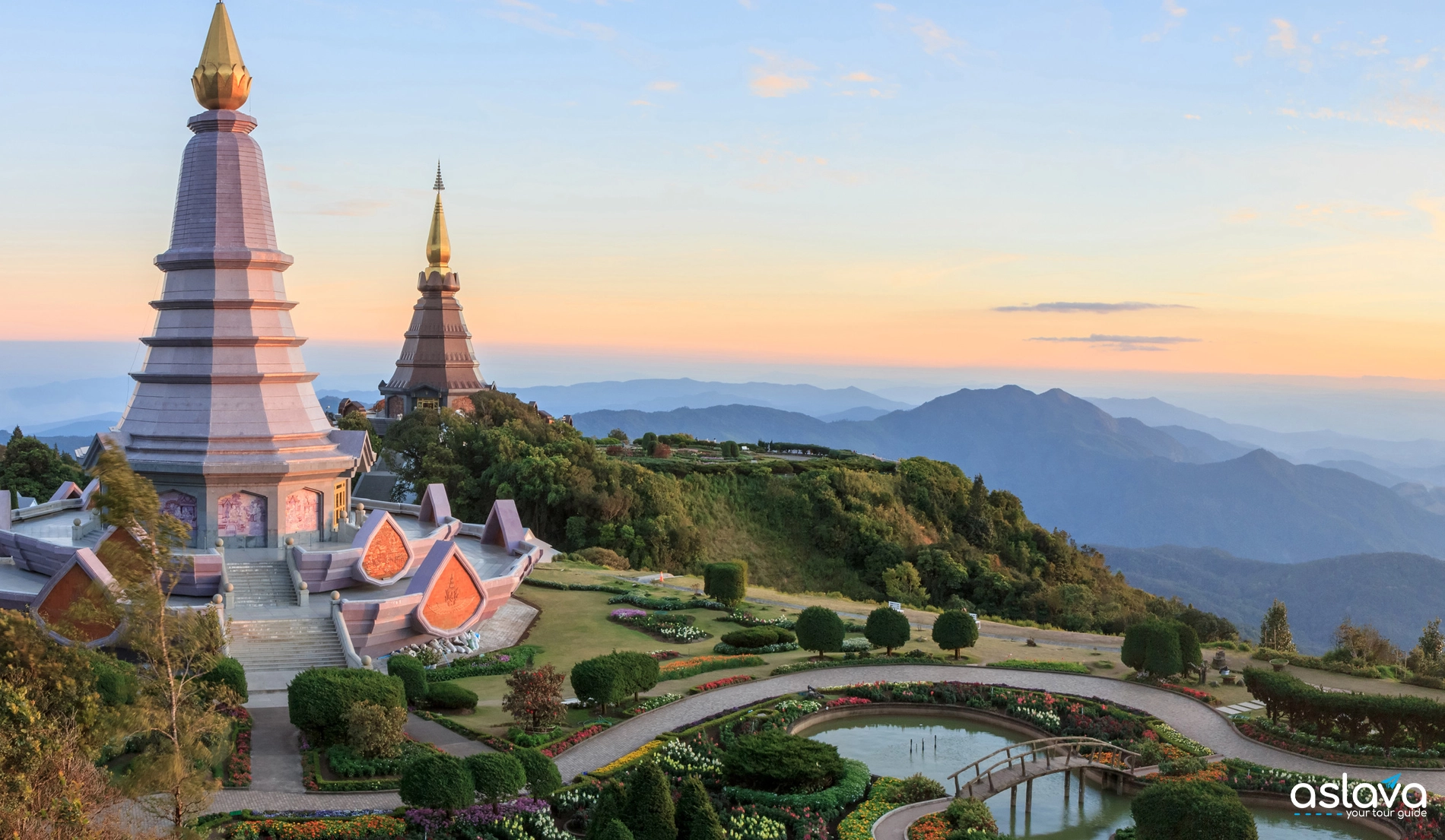
Home to Thailand’s highest peak at 2,565 meters, Doi Inthanon National Park covers a broad mountain wilderness about 90 minutes from Chiang Mai city. Often called “The Roof of Thailand,” the park features cool cloud forests draped in moss, terraced rice fields, and numerous waterfalls. Key highlights include the Royal Twin Pagodas honoring the King and Queen, the Ang Ka nature trail through high-elevation moss forest, and cascades such as Mae Ya and Wachirathan, which are perfect stops after short hikes.
Top Attractions
-
Summit – Thailand’s highest point with panoramic viewing areas
-
Royal Twin Pagodas – Elegant pagodas with manicured gardens and mountain vistas
-
Ang Ka Nature Trail – Boardwalk through a rare high-elevation moss forest
-
Waterfalls – Mae Ya, Wachirathan, Sirithan, and others
-
Karen Hill Tribe Villages – Traditional communities practicing sustainable agriculture
-
Kew Mae Pan Trail – Spectacular ridge hike where a local guide is often required
Visitor Information
-
Location: ~90 km southwest of Chiang Mai city
-
Hours: 5:00 AM – 6:00 PM daily (confirm current hours locally)
-
Entrance fee: Around 300 baht for foreigners (+ vehicle fee; verify current rates)
-
Getting there: Private tour, rental car/motorbike, or songthaew from Chom Thong
-
Best time: November–February for cool, clear conditions
-
Accommodation: Camping and park bungalows available—book early in high season
Elephant Nature Park: Ethical Wildlife Encounters
Elephant Nature Park is a leading elephant sanctuary near Chiang Mai that focuses on ethical, observation-based experiences. Founded by Sangduen “Lek” Chailert, the park prioritizes rehabilitation and education instead of riding or performances. Therefore, visitors typically watch elephants roaming in family groups, feeding, and bathing while learning about their rescue stories and broader conservation issues.
What to Experience
-
Elephant Observation – Watch elephants interact naturally in family groups
-
Feeding Time – Help prepare food and feed elephants from designated platforms
-
Bathing Viewings – Observe elephants bathing in rivers (without direct bathing with them)
-
Rescue Stories – Hear about individual elephants’ journeys to the sanctuary
-
Conservation Education – Talks about welfare, tourism ethics, and habitat protection
-
Multi-Species Sanctuary – Meet other rescued animals such as water buffalo and dogs
Visitor Tips
-
Location: ~60 km north of Chiang Mai in Mae Taeng district
-
Visit options: Day visit (~2,500 baht), overnight (~5,800 baht), or longer volunteer programs (confirm current prices)
-
Booking: Reserve well in advance via the official website—spaces fill quickly
-
Getting there: Most visits include hotel pick-up and drop-off from Chiang Mai
-
What to bring: Hat, sunscreen, insect repellent, and a change of clothes
-
Ethical note: Choose sanctuaries that prohibit riding, tricks, or forced performances
Sticky Waterfall (Bua Tong): Nature’s Climbing Wall
Bua Tong, known as the “Sticky Waterfall,” offers a rare, family-friendly climbing experience. Mineral deposits on the limestone cascades create a surprisingly grippy surface, so you can walk up the waterfall without slipping. Located in Sri Lanna National Park about 60 km north of Chiang Mai, the multi-tiered falls include refreshing pools, climbing sections of varying difficulty, and peaceful jungle surroundings—ideal for a half-day or full-day escape.
Waterfall Highlights
-
Climbing Experience – Walk or climb the falls barefoot using natural traction
-
Multiple Tiers – Cascades at different heights and difficulty levels
-
Natural Pools – Cool swimming spots between the cascades
-
Jungle Trails – Short paths and picnic areas nearby
-
Nearby Springs – Visit Nam Phu Chet Si (“Seven Colors Spring”) close by
-
Family-Friendly – Suitable for mixed-ability groups with basic fitness
Visitor Information
-
Location: Sri Lanna National Park, ~60 km north of Chiang Mai
-
Hours: Roughly 8:00 AM – 5:00 PM (confirm locally)
-
Entrance fee: Often free or minimal—verify current policy
-
Getting there: Rental car/motorbike or organized tour (public transport is limited)
-
Facilities: Basic restrooms and small food stalls on-site
-
Safety: Use ropes and handrails where provided and be cautious on wet surfaces
Grand Canyon Water Park: Cliff-Jumping Adventure
For thrill-seekers, Hang Dong’s Grand Canyon Water Park (Nam Phut) transforms an old clay quarry into an adventure playground. Red clay cliffs surround deep turquoise water and host jumping platforms of about 4–10 meters high. In addition, inflatable obstacle courses, ziplines, and kayaks offer plenty of variety. Although the site feels more commercial than some natural spots, it remains a popular day-trip destination for cliff jumping and cooling off during Chiang Mai’s hot season.
Activities
-
Cliff Jumping – Platforms at various heights for different adrenaline levels
-
Swimming – Deep, refreshing waters that are ideal on hot days
-
Inflatable Course – Floating obstacle course for fun challenges
-
Zipline – Ride across the canyon and splash into the water
-
Kayaking – Paddle around calmer areas of the quarry
-
Relaxation – Bamboo platforms and shaded zones for resting
Practical Tips
-
Location: Hang Dong district, ~20 km southwest of the Old City
-
Hours: About 8:30 AM – 6:00 PM daily (confirm before visiting)
-
Entrance fee: Around 100 baht (verify current fees)
-
Getting there: Songthaew, Grab/taxi, or motorbike rental
-
Bring: Swimwear, towel, sunscreen, and preferably water shoes
-
Safety: Life jackets are usually provided—always check water depth and follow staff guidance
Cultural Attractions: Chiang Mai’s Heritage and Arts
Besides temples and natural wonders, Chiang Mai offers museums, cultural centers, and hands-on experiences that deepen your understanding of northern Thai history, art, and daily life. These attractions run from ancient Lanna artifacts to bold contemporary expressions, so visitors leave with a richer sense of the region’s cultural identity.
Old City Walls and Moat: Ancient Boundaries
Chiang Mai’s distinctive square Old City (roughly 1.6 km per side) remains encircled by sections of its original 13th-century walls and a surrounding moat. Built in 1296 when King Mengrai founded the Lanna capital, the defensive walls originally included multiple gates. Today, restored sections and the main gates help visitors envision the city’s medieval boundaries. In addition, the moat circuit creates a pleasant ~6.4 km loop for walking or cycling at sunrise or dusk.
What to See
-
Tha Phae Gate – Iconic eastern entrance, especially photogenic at sunrise and during festivals
-
Chang Phuak Gate – Northern gate close to popular street-food vendors
-
Suan Dok Gate – Western access point leading toward several important temples
-
Chiang Mai Gate – Southern entrance beside a lively evening food market
-
Corner Bastions – Reconstructed defensive structures at the moat corners
-
Moat Circuit – Ideal loop for a morning jog or relaxed evening stroll
Visitor Information
-
Location: Surrounding the Old City
-
Hours: Publicly accessible 24/7
-
Entrance fee: Free
-
Best time: Early morning for exercise or evening when the gates are illuminated
-
Photography: Excellent at Tha Phae Gate and during major festivals
-
Events: Songkran and Yi Peng celebrations often center on the gates—expect crowds
Chiang Mai Historical Centre: Understanding Lanna Heritage
Located behind the Three Kings Monument, the Chiang Mai Historical Centre offers a concise yet thorough introduction to regional history through interactive displays and artifacts. Visitors can trace Chiang Mai’s development from prehistoric settlements to the Lanna Kingdom’s height and its integration into modern Thailand. Consequently, this museum works well as a first stop before exploring nearby temples and cultural sites.
Exhibition Highlights
-
Founding of Chiang Mai – Story of King Mengrai establishing the city in 1296
-
Lanna Kingdom – Exhibits on political history, religious life, and artistic achievements
-
Daily Life – Reconstructions of traditional homes and everyday routines
-
Artistic Heritage – Examples of northern Thai crafts and religious art
-
Multimedia Presentations – Short films and interactive maps for context
-
Cultural Diversity – Exhibits about ethnic groups that shaped the region
Practical Tips
-
Location: Behind Three Kings Monument, Prapokklao Road
-
Hours: Tue–Sun, 8:30 AM – 5:00 PM (closed Mondays; confirm hours)
-
Entrance fee: Around 90 baht (combined tickets may be available)
-
Combined ticket: Approximately 180 baht for several local cultural sites (check current pricing)
-
Languages: Information typically in Thai and English
-
Time needed: Plan 1–2 hours for a complete visit
Bo Sang Umbrella Village: Parasol Craftsmanship
About 9 km east of Chiang Mai, Bo Sang is renowned for handmade paper umbrellas crafted from sa paper and bamboo. Visitors can watch artisans build frames, apply paper, and paint intricate designs. Additionally, short painting sessions allow you to decorate your own small umbrella or fan. The annual Bo Sang Umbrella Festival in January includes parades and exhibitions, making it an especially colorful moment to visit.
What to Experience
-
Craft Demonstrations – See umbrella-making from raw materials to finished product
-
Painting Sessions – Try hand-painting floral or nature motifs
-
Hands-On Activities – Decorate a mini umbrella or fan as a unique souvenir
-
Shopping – Purchase genuine handmade umbrellas and related crafts
-
Photography – Capture vibrant displays of parasols and street scenes
-
Festival – January festival with stalls, performances, and parades
Visitor Information
-
Location: San Kamphaeng district, ~9 km east of Chiang Mai
-
Hours: Most workshops open roughly 8:00 AM – 5:00 PM daily
-
Entrance fee: Free
-
Getting there: Songthaew, Grab/taxi, or a dedicated handicraft tour
-
Combined visit: Often paired with nearby silk-weaving centers
-
Shipping tip: Many vendors offer international shipping for larger items
Lanna Traditional House Museum: Living Heritage
On Chiang Mai University’s campus, the Lanna Traditional House Museum preserves historic wooden houses that were dismantled and reassembled to safeguard regional architectural traditions. Each structure—some more than 150 years old—illustrates northern styles, from kalae roof ornaments to elevated rice granaries. Consequently, visitors gain insight into everyday Lanna life before modernization.
Collection Highlights
-
Kalae Houses – Traditional homes with distinctive V-shaped rooftop decorations
-
Royal Residence – Ornate house associated with the local elite
-
Rice Granaries – Elevated storage buildings showing traditional design
-
Spirit Houses – Miniature sacred dwellings for guardian spirits
-
Traditional Gardens – Plants commonly used in daily Lanna life
-
Domestic Tools – Displays of cooking, farming, and household implements
Visitor Tips
-
Location: Chiang Mai University campus (behind the Convention Centre)
-
Hours: Mon–Sat 8:30 AM – 4:30 PM (closed Sundays; confirm hours)
-
Entrance fee: Around 20 baht (verify current rate)
-
Getting there: Red songthaew or Grab/taxi to Chiang Mai University
-
Guided tours: English-language tours sometimes available with advance booking
-
Photography: Excellent for architectural shots; some areas may restrict flash
Local Experiences: Chiang Mai Beyond the Tourist Trail
To truly know Chiang Mai, you need to step beyond headline attractions and explore neighborhoods where everyday northern Thai life unfolds. Quiet parks, small community markets, evening rituals, and hidden cafés reveal how residents live. Therefore, these experiences often feel more memorable than simply ticking off a list of famous sights.
Huay Tung Tao Lake: Local Relaxation
About 10 km from the city center, Huay Tung Tao Lake is a favorite weekend escape for Chiang Mai residents. The reservoir at the foot of Doi Suthep is ringed with dozens of bamboo huts built over the water where you can lounge and feast on local dishes. Popular with Thai families rather than international tour groups, the lake offers swimming, fishing, paddleboats, and a 3.5 km walking path—making it a perfect low-key half-day outing.
Lake Activities
-
Bamboo Hut Dining – Relax in private thatched platforms over the water
-
Local Cuisine – Enjoy fresh fish, som tam (papaya salad), and other northern specialties
-
Swimming – Use designated areas for cooling off (modest swimwear recommended)
-
Fishing – Rod rentals are often available from lakeside vendors
-
Paddleboats – Swan-shaped boats for gentle exploration
-
Walking/Jogging – 3.5 km loop around the lake for exercise
Visitor Information
-
Location: Mae Rim district, ~10 km northwest of the Old City
-
Hours: 6:00 AM – 7:00 PM daily (confirm locally)
-
Entrance fee: Around 50 baht (verify current price)
-
Getting there: Songthaew, Grab/taxi, or motorbike rental (public transport is limited)
-
Best time: Weekday mornings for serenity; weekends for lively local scenes
-
Facilities: Basic restrooms and numerous food vendors; hut rental is usually ~100 baht
Monk Chat: Spiritual Conversations
Several temples in Chiang Mai host “Monk Chat” sessions where visitors can speak informally with Buddhist monks. These conversations help monks practice English and allow travelers to learn about monastic life. As a result, Monk Chat offers a respectful window into Buddhism and local culture—so bring curiosity, listen carefully, and follow local etiquette.
What to Experience
-
Cultural Exchange – Casual conversations with monks from different backgrounds
-
Buddhist Teachings – Basic insights into principles and daily practice
-
Monastic Life – Stories about routines, ordination, and study
-
Language Practice – Help monks improve their English while learning about Thailand
-
Meditation Guidance – Short introductions to meditation at some temples
-
Personal Questions – Ask about Thai culture, customs, and spiritual perspectives
Etiquette Tips
-
Locations & Times: Common at Wat Chedi Luang and Wat Suan Dok—verify current schedules
-
Dress code: Wear modest clothing that covers shoulders and knees
-
Physical contact: Avoid touching monks; this is particularly important for women
-
Respectful posture: Sit with your feet pointed away from monks and Buddha images
-
Topics: Avoid political questions or criticism of Thai customs
-
Photos: Ask permission before taking pictures of the session
Nimmanhaemin Road: Trendy Local Scene
Often called “Nimman,” this neighborhood west of the Old City is Chiang Mai’s creative hub. Favored by students, digital nomads, and young professionals, Nimmanhaemin Road and its side streets (sois) host specialty cafés, boutiques, galleries, and innovative restaurants. Consequently, Nimman provides a modern contrast to the Old City—ideal for specialty coffee, design-focused shopping, and lively nightlife.
Nimman Highlights
-
Café Culture – Specialty coffee shops featuring local roasters
-
One Nimman – Stylish complex with shops, eateries, and art events
-
Think Park – Space for pop-up markets and creative performances
-
Boutique Shopping – Independent designers and unique home goods
-
Gallery Hopping – Contemporary art spaces showcasing emerging Thai artists
-
Craft Beer Bars – Microbreweries and trendy bars for evening drinks
Visitor Tips
-
Location: West of the Old City, near Chiang Mai University
-
Getting there: Red songthaew (~30–40 baht) or Grab/taxi from the Old City
-
Best time: Afternoons for café-hopping; evenings for dinner and nightlife
-
Navigation: Main action lies along Nimmanhaemin Road and sois 1–17
-
Accommodation: Trendy boutique hotels and serviced apartments for those who prefer staying outside the Old City
-
Local feel: Area is popular with Thai youth, giving it a more local vibe than some tourist zones
Khao Soi Experience: Northern Thai Culinary Icon
No visit to Chiang Mai is complete without a bowl of khao soi, the region’s signature curry noodle soup. This fragrant dish combines soft egg noodles in a coconut-curry broth, usually topped with chicken or beef and crispy fried noodles. It arrives with lime, pickled mustard greens, shallots, and chili paste on the side. Influenced by Burmese and Yunnanese flavors, khao soi stands out as one of the most memorable northern Thai dishes.
Top Khao Soi Destinations
-
Khao Soi Khun Yai – Beloved grandmother’s recipe near Chang Phuak Gate
-
Khao Soi Lam Duan – Long-running specialist in the Wat Fa Ham area
-
Khao Soi Mae Sai – Popular eatery with several curry options
-
Khao Soi Mae Manee – Local favorite known for its rich, layered broth
-
Huen Phen – Traditional northern Thai restaurant serving excellent khao soi
-
Khao Soi Islam – Muslim-style version with a distinct spice profile
Culinary Tips
-
Price range: Roughly 40–80 baht per bowl (check current prices)
-
Best time: Many shops open mainly for lunch (around 10:00 AM–2:00 PM)
-
Customization: Use condiments to adjust heat and sourness to your taste
-
Variations: Try chicken, beef, pork, or Muslim-style versions
-
Local style: Mix the condiments into the broth before eating for full flavor
-
Pairings: Add sai ua (northern sausage) or sticky rice for a more filling meal
Day Trips from Chiang Mai: Beyond the City
Once you’ve explored Chiang Mai’s main urban highlights, you can look outward to day trips that reveal northern Thailand’s spectacular countryside. These accessible excursions showcase varied landscapes—from misty mountain villages to dramatic national parks. Therefore, whether you enjoy temple hopping, trekking, or relaxed village homestays, you’ll find an outing that fits your travel style and schedule.
Chiang Rai & the White Temple: Artistic Wonders
About a three-hour drive north of Chiang Mai, Chiang Rai makes an excellent full-day art and culture trip. The best-known attraction is Wat Rong Khun (the White Temple), an ongoing project by artist Chalermchai Kositpipat that reimagines traditional temple design using white plaster and mirror glass. Nearby, the Blue Temple (Wat Rong Suea Ten) glows with cobalt-blue murals, while Baan Dam (the Black House) presents a darker, provocative art complex. Taken together, these sites turn Chiang Rai into one of the most visually striking day destinations near Chiang Mai.
Must-See Attractions
-
White Temple (Wat Rong Khun) – Contemporary Buddhist complex with surreal details
-
Blue Temple (Wat Rong Suea Ten) – Intense azure interior with gilded accents
-
Black House (Baan Dam) – Eclectic artistic compound with dark wooden structures
-
Golden Clock Tower – Ornate city landmark with an evening light show
-
Hill Tribe Villages – Cultural visits to nearby communities
-
Tea Plantations – Scenic stops among rolling green tea fields
Planning Your Visit
-
Getting there: Organized tour (~1,000–1,500 baht), private car hire, or public bus
-
Hours: White Temple typically open ~8:00 AM – 5:00 PM (verify current times)
-
Entrance fees: White Temple (~50 baht), Blue Temple (often free), Black House (~80 baht)—confirm rates
-
Duration: Often a full-day trip (around 12+ hours including travel time)
-
Best time: Weekday mornings to avoid the biggest crowds
-
Photography: Usually allowed, but follow site-specific rules
Doi Inthanon National Park as a Day Trip
Doi Inthanon is not only a multi-day nature destination; it also works well as a focused day trip from Chiang Mai. Because of its cooler climate, mossy forests, and spectacular viewpoints, many travelers choose a day tour that includes the summit, Royal Twin Pagodas, a short nature trail, and one or two major waterfalls.
Day Trip Essentials
-
Summit Stop – Quick visit to Thailand’s highest point
-
Pagoda Visit – Time to explore the pagodas and surrounding gardens
-
Short Hike – Ang Ka Nature Trail or Kew Mae Pan (if time and season permit)
-
Waterfall Stop – Visit Mae Ya or Wachirathan for photos and fresh air
Practical Notes
-
Distance: ~90 km from Chiang Mai city
-
Transport: Organized tour, rental car, or joining a group songthaew
-
Timing: Typically a full day, often leaving in the morning and returning before evening
Pai: Bohemian Mountain Retreat
Pai is a laid-back mountain town northwest of Chiang Mai that rewards a slower pace. While it can be visited as a very long day trip, it is best enjoyed over at least one or two nights. The road to Pai is famously winding, so anyone prone to motion sickness should prepare accordingly. Once there, you can soak in hot springs, hike canyons, and enjoy a relaxed artsy atmosphere.
Pai Highlights
-
Pai Canyon – Sunset hikes with dramatic ridgelines and views
-
Tha Pai Hot Springs – Natural thermal pools for soaking
-
Memorial Bridge – WWII-era bridge with scenic photo opportunities
-
Wat Phra That Mae Yen – Hilltop temple with a white Buddha overlooking the valley
-
Walking Street – Evening market with food, crafts, and live music
-
Pai River – Options for bamboo rafting and riverside relaxation
Planning Your Visit
-
Getting there: Minivan from Chiang Mai (~150–200 baht, 3–4 hours), private car, or motorbike (only if very experienced)
-
Day trip challenge: Round-trip travel makes a same-day visit tiring; 2–3 days are more comfortable
-
Motion sickness: Take precautions for the winding mountain road
-
Ideal length: Stay 2–3 days to explore at a relaxed pace
-
Best season: November–February for pleasant weather
-
Local transport: Motorbike rental is very useful for visiting nearby sights
Mae Kampong: Authentic Village Life
About 50 km east of Chiang Mai, Mae Kampong offers a genuine village experience built around community-based tourism. Known for miang (fermented tea leaves), the village welcomes visitors to stroll narrow lanes, visit tea-processing sites, and join homestays that showcase local hospitality. Because tourism here is integrated into everyday life, the experience feels authentic rather than staged.
Village Experiences
-
Village Walking Tour – Wander along lanes between wooden houses and streams
-
Tea Processing – Learn how miang is cultivated and fermented
-
Waterfall Trail – Short hike to a nearby waterfall
-
Local Cuisine – Enjoy home-cooked northern dishes with host families
-
Coffee Workshops – Participate in small-scale coffee processing
-
Handicrafts – Watch bamboo weaving and other traditional skills
Practical Information
-
Location: ~50 km east of Chiang Mai (Mae On district)
-
Getting there: Organized tour, arranged songthaew, or private vehicle
-
Entrance fee: Small village maintenance fee (around 20 baht)
-
Best time: Morning visits for cooler temperatures and clearer views
-
Homestay option: Typical rates ~550–650 baht per person including meals (book ahead)
-
Respect: Remember that this is a living community—observe local customs and privacy
Practical Tips for Visiting Chiang Mai
To make the most of your Chiang Mai visit, it helps to understand how to get around, what to expect from the weather, and how to navigate local etiquette. With a bit of preparation, you can explore the city confidently and respectfully.
Getting Around
-
Songthaews: Red shared pickup trucks are Chiang Mai’s main public transport. Short rides typically cost about 30–40 baht (always check current fares).
-
Tuk-tuks: Convenient for short distances; always agree on the fare beforehand (usually around 80–150 baht depending on distance).
-
Grab app: Southeast Asia’s main ride-hailing app; often easier than street taxis and helpful for getting fixed fares.
-
Bicycle rental: Ideal for exploring the flat Old City (roughly 50–100 baht per day); confirm secure storage at your accommodation.
-
Motorbike rental: Offers freedom for exploring outside the city but requires experience and an international license. Typical rates are 200–300 baht per day—ride cautiously on busy roads.
-
Walking: The Old City is compact and very walkable, especially during the cooler mornings and evenings.
Weather & What to Pack
-
Cool season (Nov–Feb): Generally the most pleasant (about 21–29°C / 70–85°F). Bring a light jacket for cooler evenings.
-
Hot season (Mar–May): Very warm (often up to 35–40°C / 95–105°F). Pack breathable clothing, sunscreen, and a hat.
-
Rainy season (Jun–Oct): Expect frequent afternoon downpours—carry a compact umbrella or quick-dry gear.
-
Temple visits: Bring modest clothing that covers shoulders and knees; sarongs are sometimes available at major temples.
-
Footwear: Slip-on shoes are convenient because you’ll often remove them at temples and some homes.
-
Smoky season: Air quality can worsen between February and April during agricultural burning. If you’re sensitive, consider masks or adjusting your travel dates.
Money & Costs
-
Currency: Thai Baht (฿). ATMs are widespread but often charge foreign withdrawal fees (commonly around 220 baht), so check with your bank.
-
Daily budgets: Backpacker ~600–1,200 baht/day; mid-range ~1,200–3,000 baht/day; luxury 3,000+ baht/day.
-
Tipping: Not mandatory, but 5–10% is appreciated in restaurants and for good service.
-
Bargaining: Normal at markets and with tuk-tuk drivers; less appropriate in department stores and established restaurants.
-
Cards vs. cash: Credit cards are accepted at many hotels and larger restaurants; carry cash for markets and street food.
-
Banking hours: Typically 8:30 AM–3:30 PM on weekdays; currency exchange counters are common at the airport and in tourist areas.
Cultural Etiquette
-
Royal respect: Always speak respectfully about Thailand’s royal family—criticism can be both culturally offensive and legally problematic.
-
Wai greeting: The traditional wai (palms together) is common; return it if someone greets you this way.
-
Head and feet: The head is considered sacred, while feet are seen as unclean. Avoid touching anyone’s head or pointing with your feet.
-
Temple behavior: Remove shoes, cover shoulders and knees, speak softly, and never point at Buddha images.
-
Public behavior: Thais value calm and self-control—avoid loud confrontations or displays of anger.
-
Monks: Women should not touch monks or hand items to them directly; maintain respectful distance during interactions.
Health & Safety
-
Drinking water: Stick to bottled water. Reputable restaurants usually use safe ice, though street vendors may vary.
-
Street food: Choose busy stalls with high turnover; freshly cooked food is usually both safe and delicious.
-
Sun protection: Northern Thailand’s UV index can be high—use SPF 30+ and seek shade at midday.
-
Mosquitoes: Use repellent, especially during the rainy season, as dengue is present in parts of Thailand.
-
Tourist police: Dial 1155 for English-speaking assistance.
-
Road safety: Motorbike accidents are among the most common tourist risks—wear helmets, drive cautiously, and consider alternatives if you’re inexperienced.
Communication
-
WiFi: Widely available in cafés, restaurants, and hotels—download offline maps before heading out.
-
SIM cards: Affordable tourist SIMs are sold at the airport and convenience stores; consider buying one on arrival.
-
Language: Basic English is common in tourist areas, but learning a few Thai phrases is appreciated.
-
Translation apps: Apps like Google Translate work well; save common phrases in Thai script for drivers.
-
Addresses: Ask your hotel to write key locations in Thai script to show to songthaew or taxi drivers.
-
Emergency numbers: Tourist Police (1155), Ambulance (1669), General Emergency (191).
Frequently Asked Questions About Chiang Mai
How many days do I need to explore Chiang Mai?
A minimum of 3 full days lets you cover the major city highlights. However, 5–7 days gives you time for day trips (such as Doi Inthanon and Chiang Rai) and for enjoying markets, temples, and neighborhoods at a more relaxed pace. If possible, include a Sunday so you can experience the famous Sunday Walking Street Market.
What’s the best area to stay in Chiang Mai?
For first-time visitors, the Old City is ideal because it offers walkable access to temples, markets, and many restaurants, with plenty of guesthouses and boutique hotels. Nimman provides a trendier, modern vibe popular with digital nomads and younger travelers. Meanwhile, riverside hotels offer scenic calm but often require transport to reach many sights. Ultimately, choose between convenience (Old City) and a more modern scene (Nimman) based on your travel style.
Is Chiang Mai safe for tourists?
Generally, Chiang Mai is considered safe, and violent crime against tourists is rare. The main risks include motorbike accidents, petty theft in crowded places, and occasional scams. Therefore, use sensible precautions: keep valuables secure, avoid poorly lit areas late at night, and be cautious with offers that seem unrealistically cheap.
When is the best time to visit Chiang Mai?
The cool season (November–February) offers the most comfortable weather and overlaps with festivals like Loy Krathong/Yi Peng and the Flower Festival. March–May is hot and sometimes smoky due to agricultural burning. The rainy season (June–October) brings afternoon showers, greener scenery, and fewer tourists. If you’re planning to attend Yi Peng, book hotels and tours several months in advance.
How do I find ethical elephant experiences?
Look for sanctuaries that focus on observation, rehabilitation, and education rather than riding or shows. Reputable options, including Elephant Nature Park and other vetted sanctuaries, clearly state that they prohibit riding and performances. Before booking, verify what each program includes and how the elephants are treated.
Chiang Mai: A City of Endless Discoveries
Why Chiang Mai Feels So Special
In summary, Chiang Mai captivates with a graceful blend of ancient and modern, traditional and innovative, energetic and peaceful. As the “Rose of the North,” it offers layered experiences—from the spiritual calm of mountaintop temples to the creative energy of contemporary art spaces, and from savoring a perfect bowl of khao soi at a neighborhood stall to observing elephants in ethical sanctuaries.
Furthermore, part of Chiang Mai’s charm is how accessible and authentic it still feels. For instance, in the early morning you might see monks sweeping temple grounds along a quiet soi. A little later, in a nearby market, you may encounter vendors wearing traditional hill-tribe dress as part of everyday life rather than a performance. Moreover, friendly conversations with local artists or craftspeople often reveal the warm northern Thai hospitality that many travelers remember most.
How to Shape Your Own Chiang Mai Itinerary
As you plan the best places to visit in Chiang Mai, try to balance must-see attractions with slower, unstructured wandering. Allow time to get pleasantly lost inside the Old City walls, to linger in a café and watch daily life, or to follow the smell of grilled sai ua down a side street to a tiny food stall. Ultimately, Chiang Mai’s true magic lies as much in these spontaneous, unscripted moments as in its grand temples and organized excursions.
-
Start with the spiritual heart: Visit Wat Phra That Doi Suthep, Wat Chedi Luang, and Wat Phra Singh for an essential introduction to the city’s heritage.
-
Use local transport: Ride songthaews, hop in tuk-tuks, and explore the compact Old City on foot or by bicycle.
-
Mix your itinerary: Combine iconic sights with quieter experiences—village visits, morning markets, and neighborhood cafés help you avoid “temple fatigue.”
-
Go beyond the center: Add day trips to Doi Inthanon, Chiang Rai, or nearby villages to experience northern Thailand’s broader landscapes and culture.